FORENSIC REALITY CAPTURE

FORENSIC CSI
& ACCIDENT RECONSTRUCTION

Capture the Scene. Preserve the Geometry. Build a Clear Visual Record.

GO3D Provides 3D Laser Scanning, Scene Documentation, Reconstruction Support and Forensic Visualization for Complex Investigations and Litigation.

The Goal Is Simple. Capture Physical Conditions Before the Scene Changes, Then Turn That Data Into Material Investigators, Attorneys, Engineers and Retained Experts Can Study and Explain.

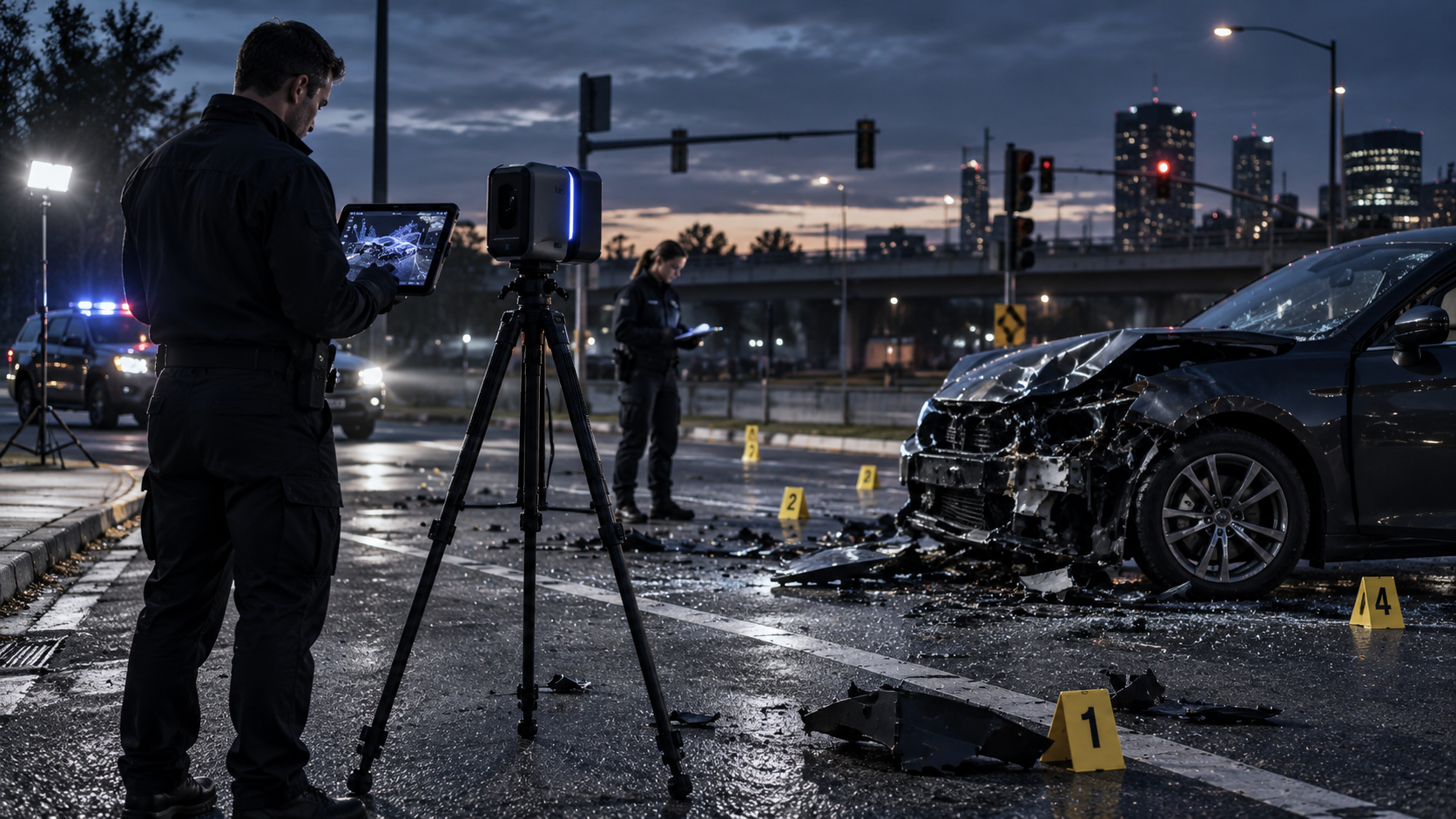
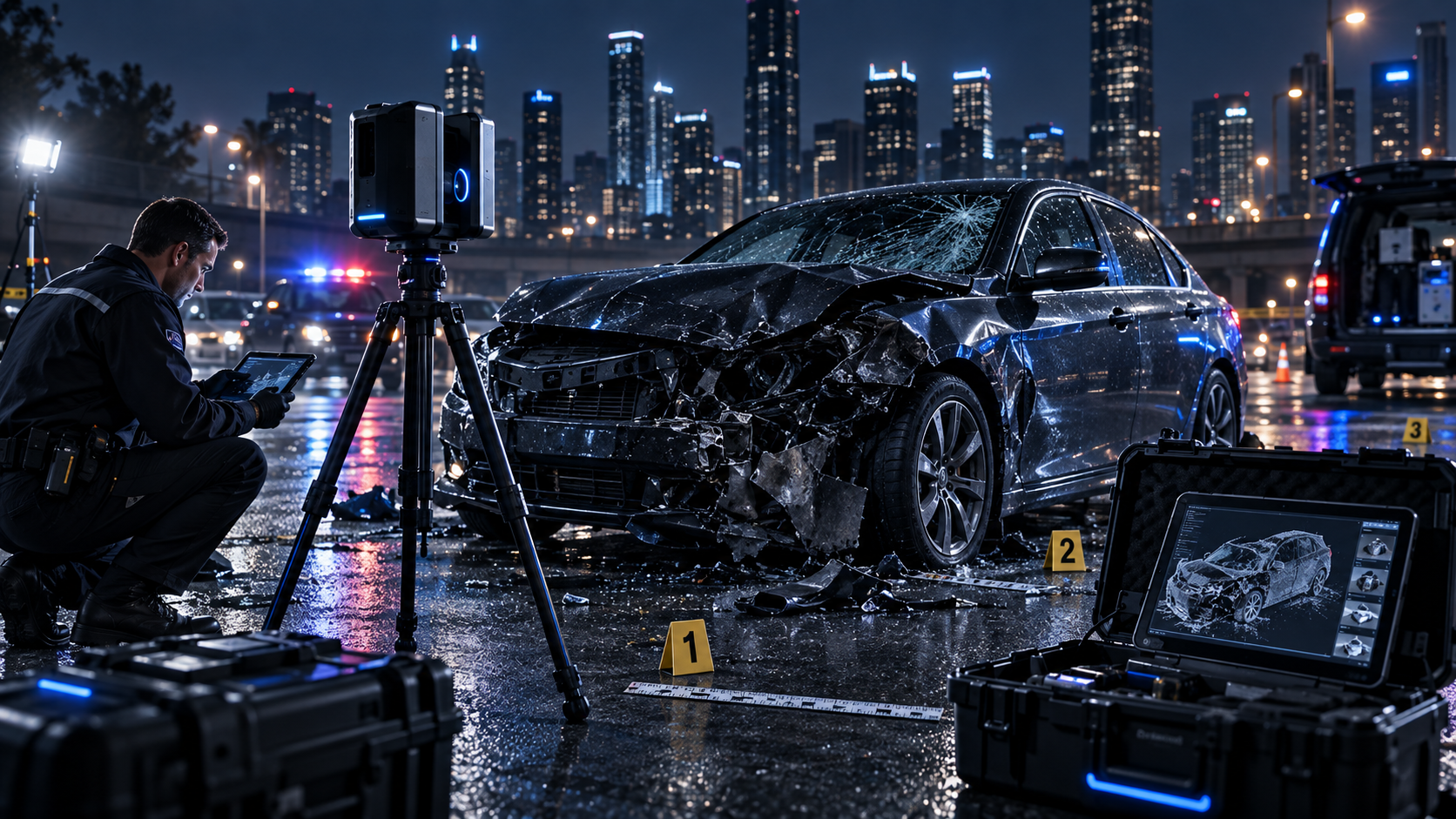
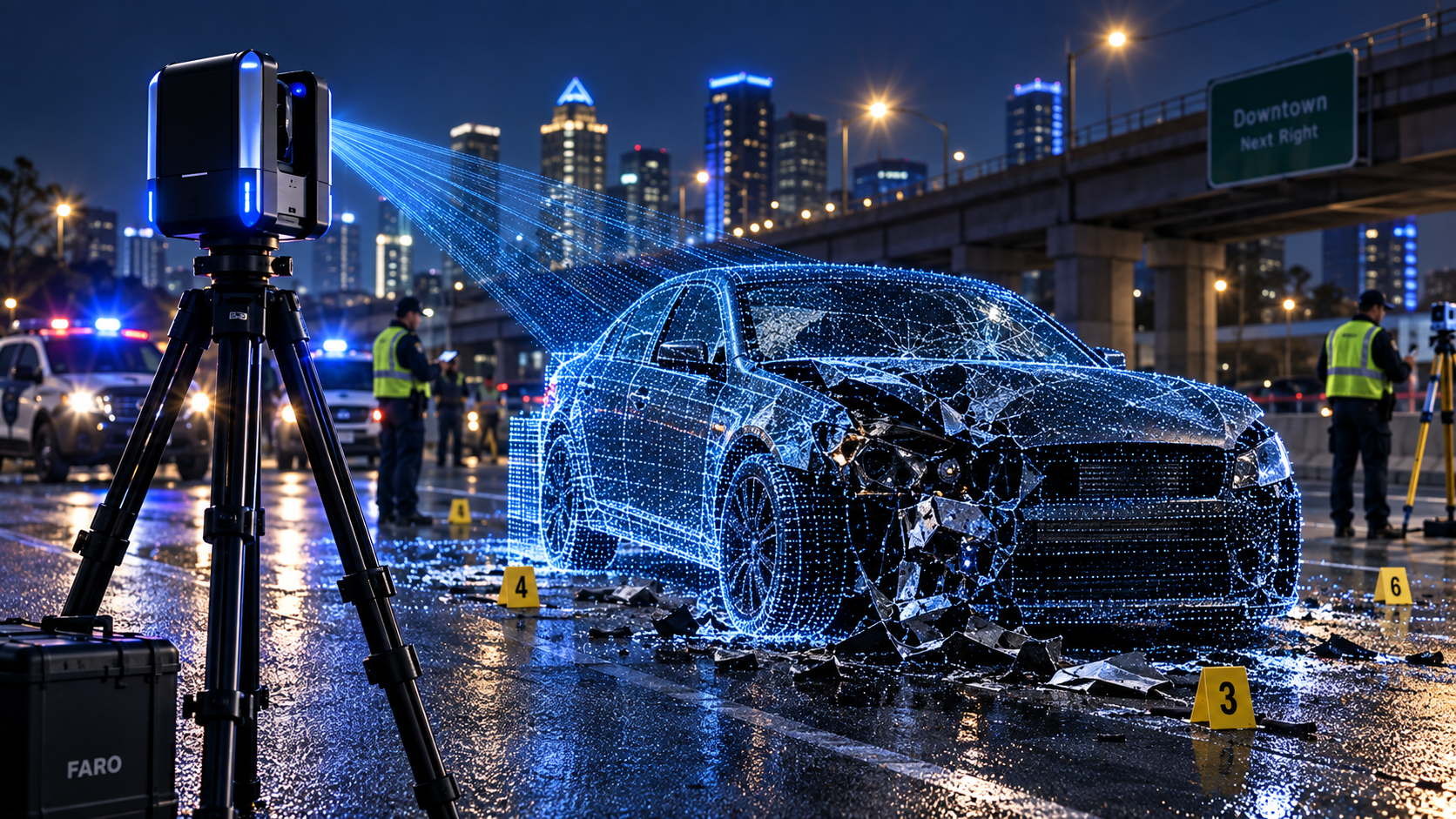
Tripod laser scanner documenting a damaged vehicle at night

DISCUSS YOUR PROJECT

CAPTURE MORE THAN A SERIES OF PHOTOGRAPHS

Photographs preserve selected views.

Manual measurements preserve selected distances.

A 3D scan records the shape and position of surfaces across the scene. The resulting point cloud gives investigators and technical teams a measurable digital reference after vehicles move, debris is cleared, repairs begin or access to the location ends.

That matters when a case involves distance, height, visibility, vehicle position, roadway geometry, structural conditions or the relationship between several pieces of evidence.

GO3D prepares captured data for technical review, 3D modeling, reconstruction support and visual presentation.

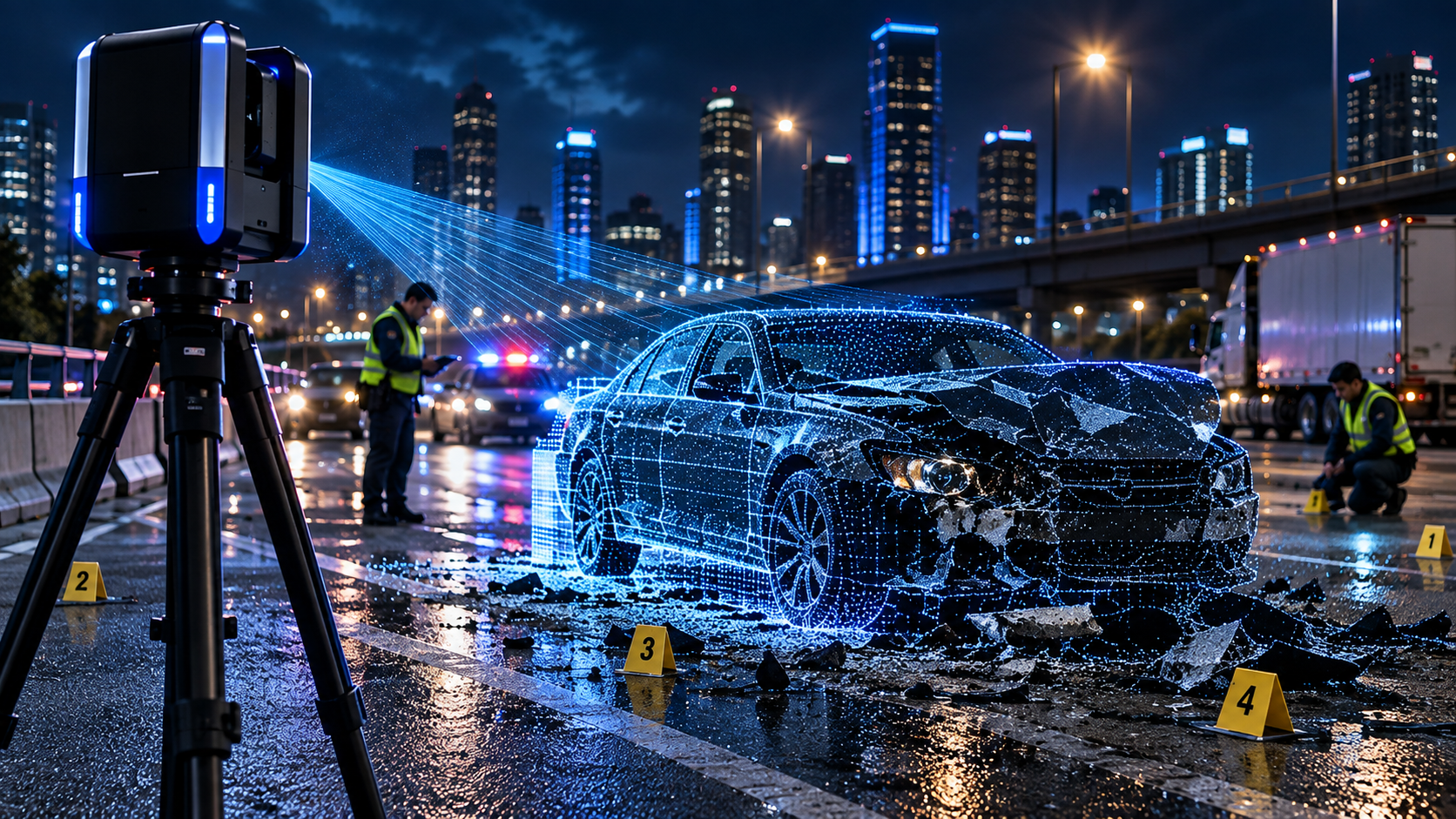
Vehicle collision scene shown with a blue 3D point cloud

TWO PATHS. ONE SPATIAL RECORD.

PUBLIC AND PRIVATE FORENSIC WORK

Forensic 3D scanning serves two different groups on this site.

Public-sector work focuses on scene documentation, agency needs and measurable records.

Private-sector work focuses on litigation, insurance, expert review and technical presentation.

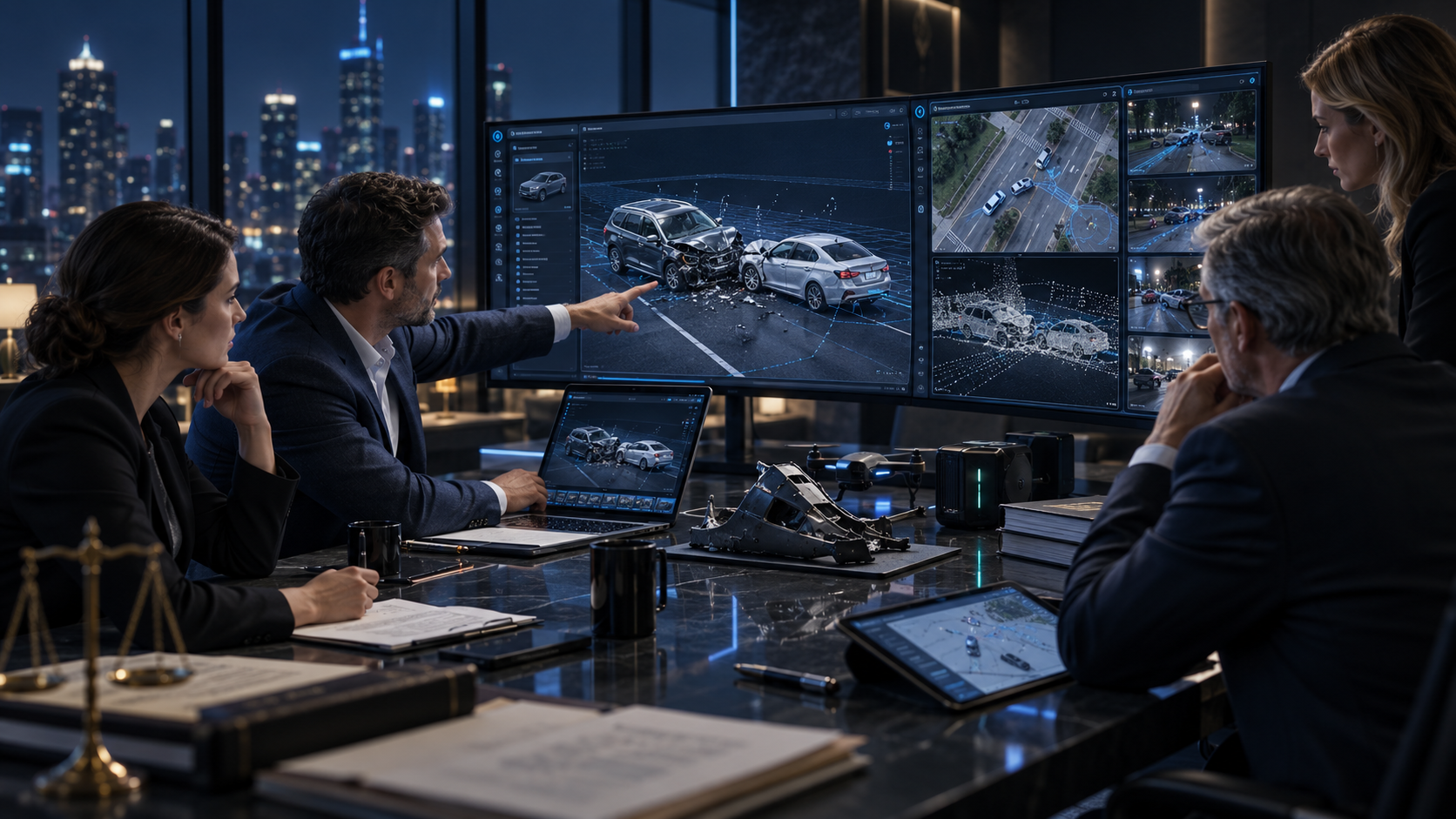
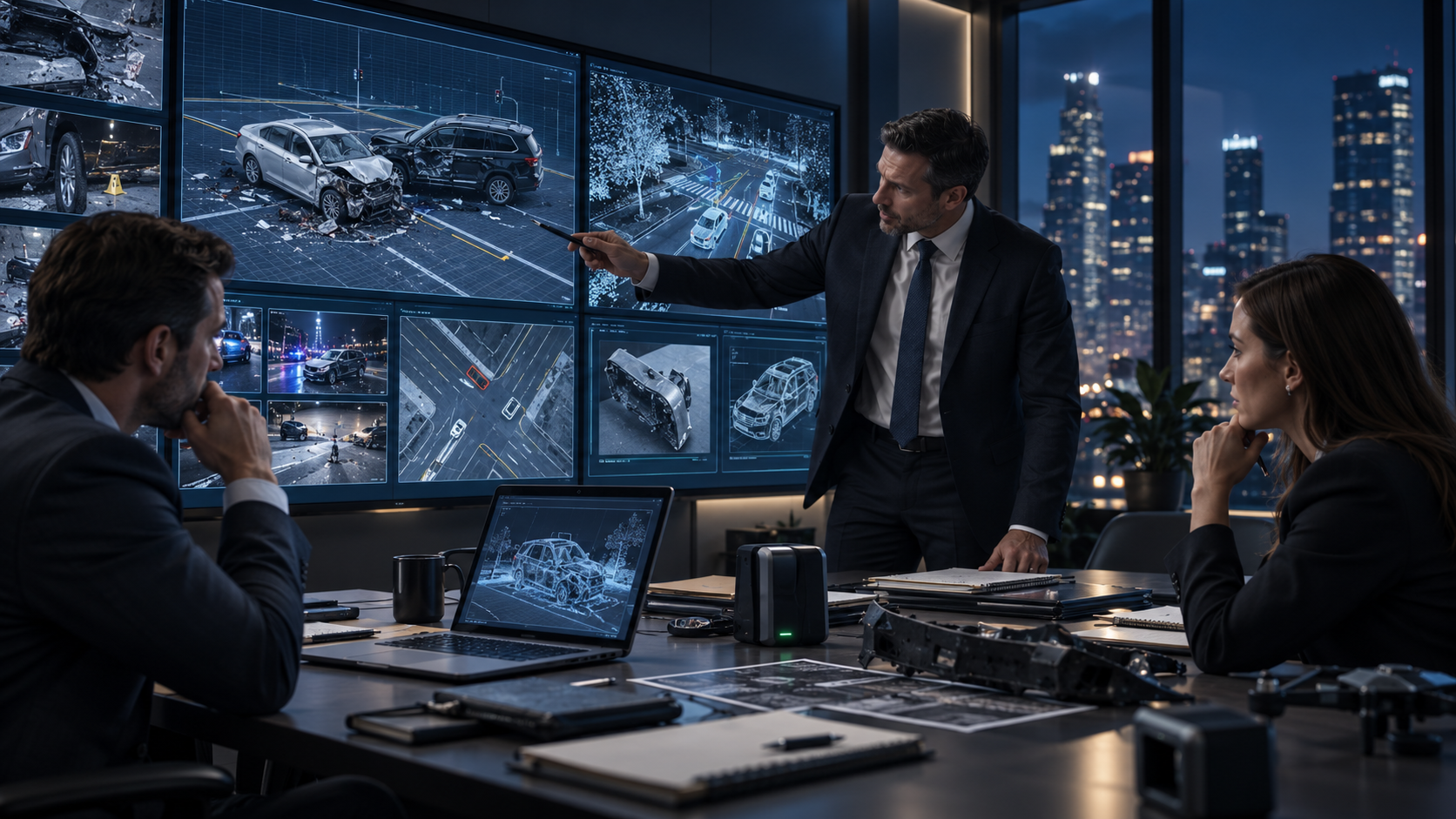
Legal team reviewing collision models and scene photographs

Private-Sector
Litigation & Investigation

Law firms, insurers, engineers, expert witnesses and private investigators often work from several sources at once.

They may have photographs, measurements, reports, damaged components, CAD files and expert analysis.

A 3D model gives the team one spatial reference for reviewing how those pieces relate to each other.

  • Personal Injury Litigation
  • Vehicle Collision Claims
  • Premises Liability
  • Product Liability
  • Construction Disputes
  • Property Damage Claims
  • Insurance Investigations
  • Mechanical Failure Documentation
  • Workplace Incidents
  • Expert Witness Exhibits
  • Mediation Presentations
  • Trial Graphics

The scan does not decide fault.

It preserves geometry that qualified experts can review with the other evidence in the case.

High-end visualization can then turn that technical material into clear exhibits, still images, models or animation assets.
PRIVATE-SECTOR SERVICES
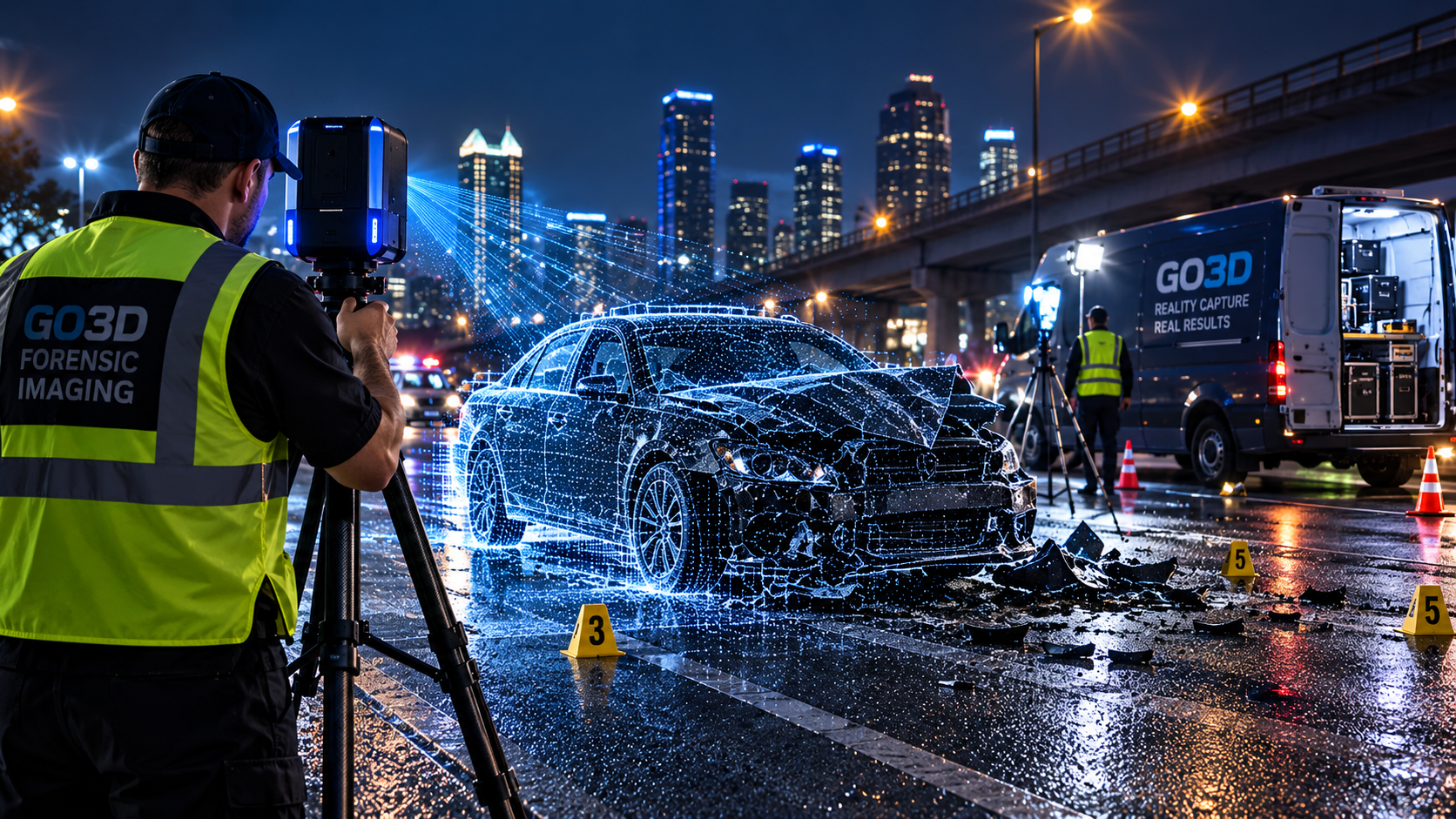
Scene documentation team scanning a damaged vehicle

Public-Sector
Forensic & Agency Applications

Public agencies often need to document a scene quickly and preserve its physical layout.

3D laser scanning can record roadways, rooms, structures, vehicles, objects and surrounding conditions before the scene changes.

  • Traffic Collision Scenes
  • Major Crash Documentation
  • Crime Scene Documentation
  • Fire and Explosion Scenes
  • Structural Incidents
  • Public Property Damage
  • Emergency Response Documentation
  • Scene Diagrams
  • Measurable Digital Models
  • Training Environments
  • Multi-Agency Technical Review
  • Long-Term Scene Preservation

The value comes from preserving spatial relationships.

Investigators can return to the digital scene later and review distances, positions and viewpoints without relying on memory alone.

Accurate scene capture can also help agencies preserve conditions that may change within hours. Roadways reopen. Vehicles are removed. Debris is cleared. Structures are repaired.

A measurable 3D record gives investigators another reference point for later review, technical analysis, training and coordination with outside experts.

PUBLIC-SECTOR SERVICES

WHAT 3D LASER SCANNING CAN DOCUMENT

Scanner recording vehicle damage and the surrounding roadway

Vehicle & Collision Scenes

Record vehicle positions, damage, roadway geometry, barriers, impact areas and surrounding structures.

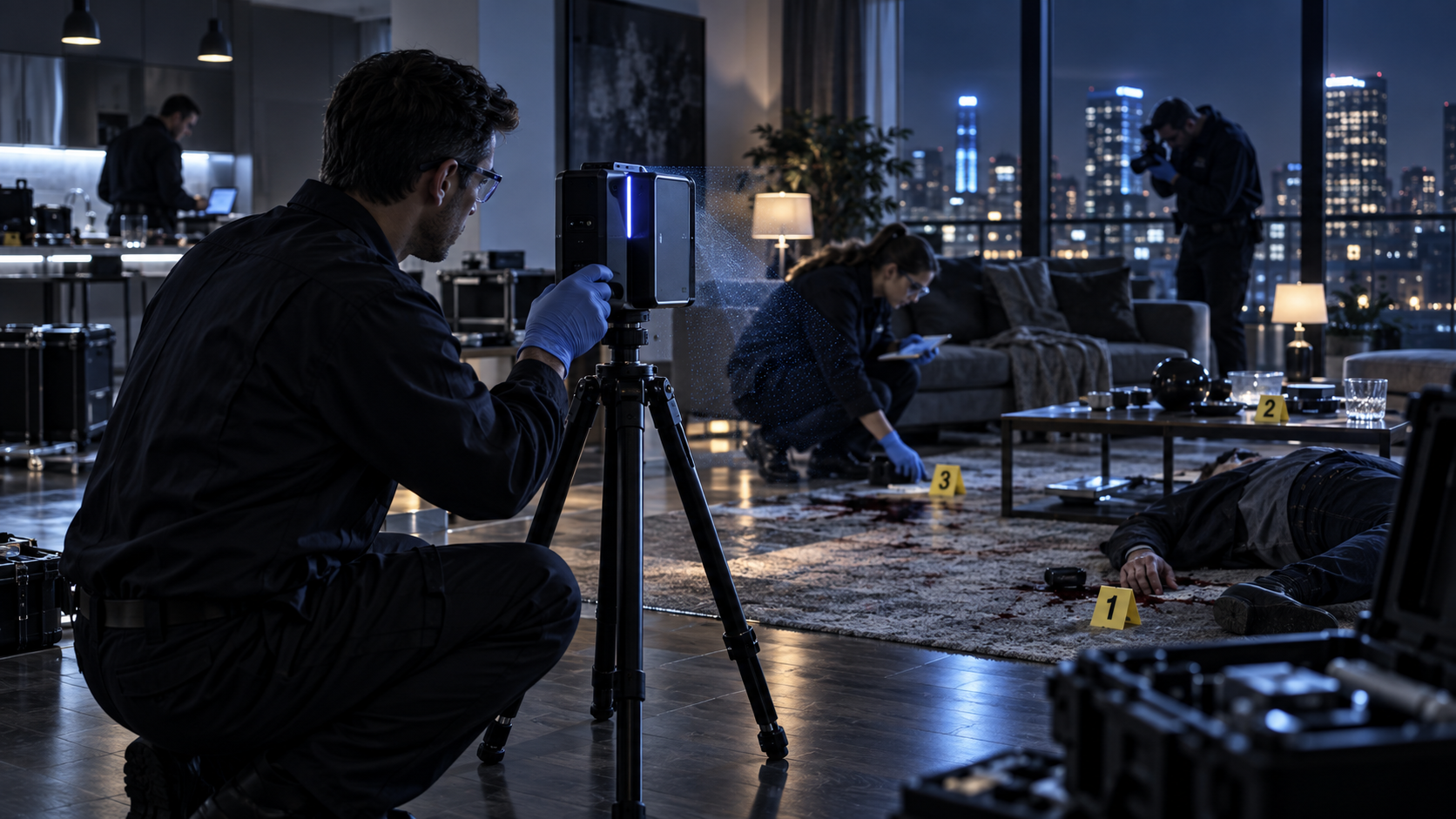
Investigators scanning and documenting an indoor crime scene

Crime & Incident Scenes

Preserve rooms, exterior areas, object locations and measurable spatial relationships.

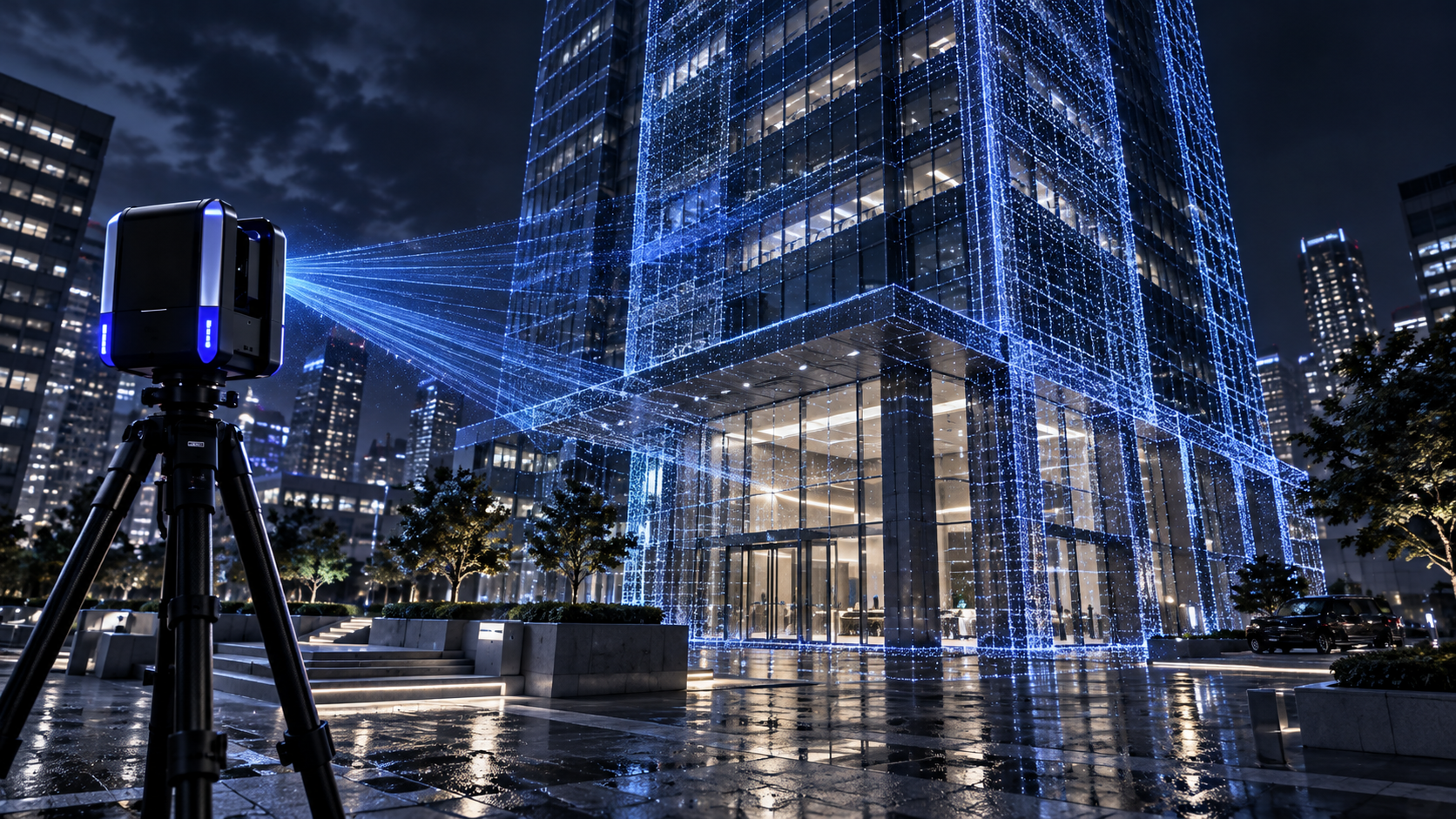
Tripod scanner capturing the exterior of a commercial building

Buildings & Premises

Document stairs, walkways, floor elevations, structures, visibility conditions and surrounding property.

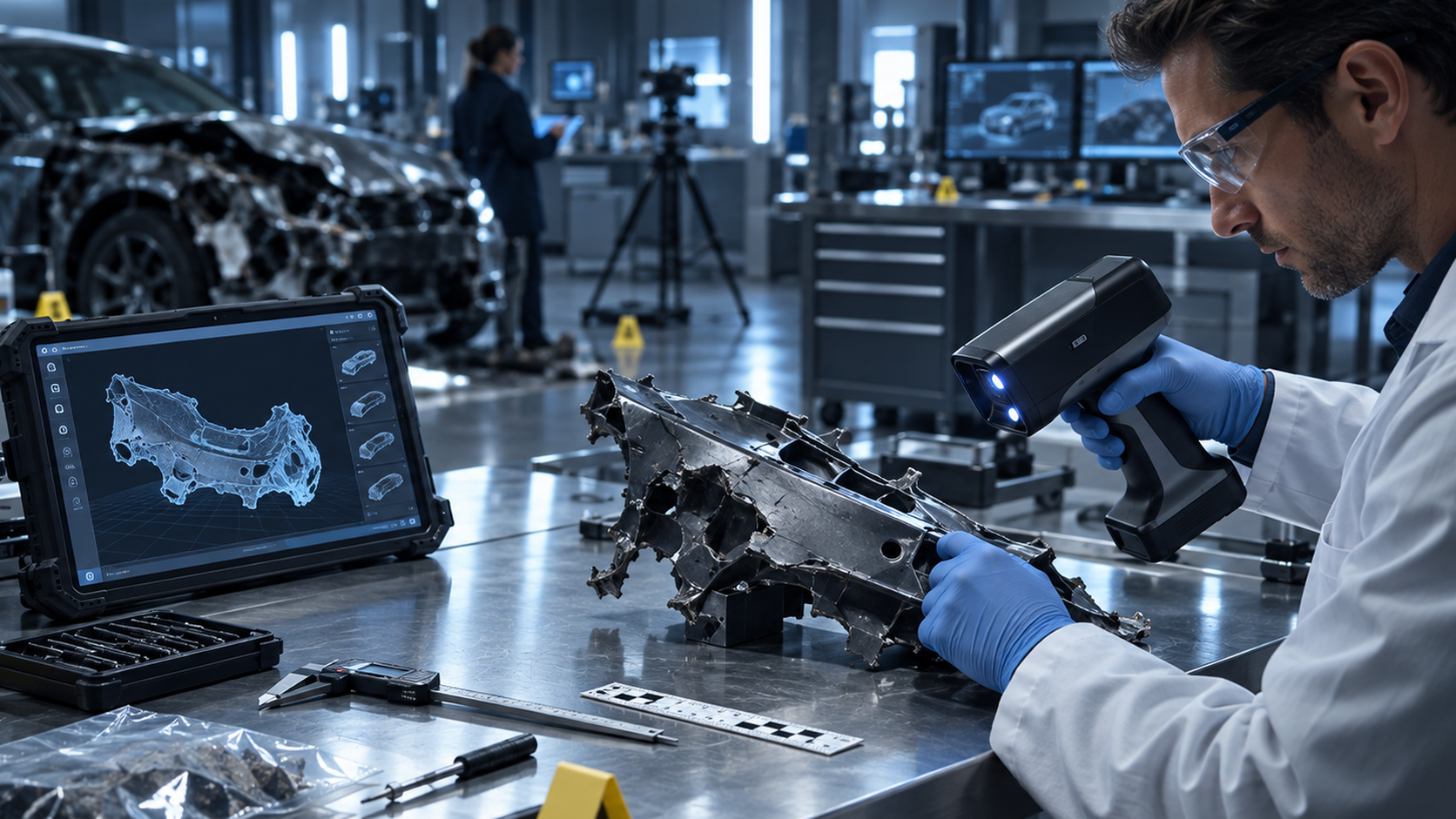
Technician scanning a damaged mechanical component in a laboratory

Mechanical Components

Digitize damaged parts, assemblies, deformation, wear and component geometry for technical review.

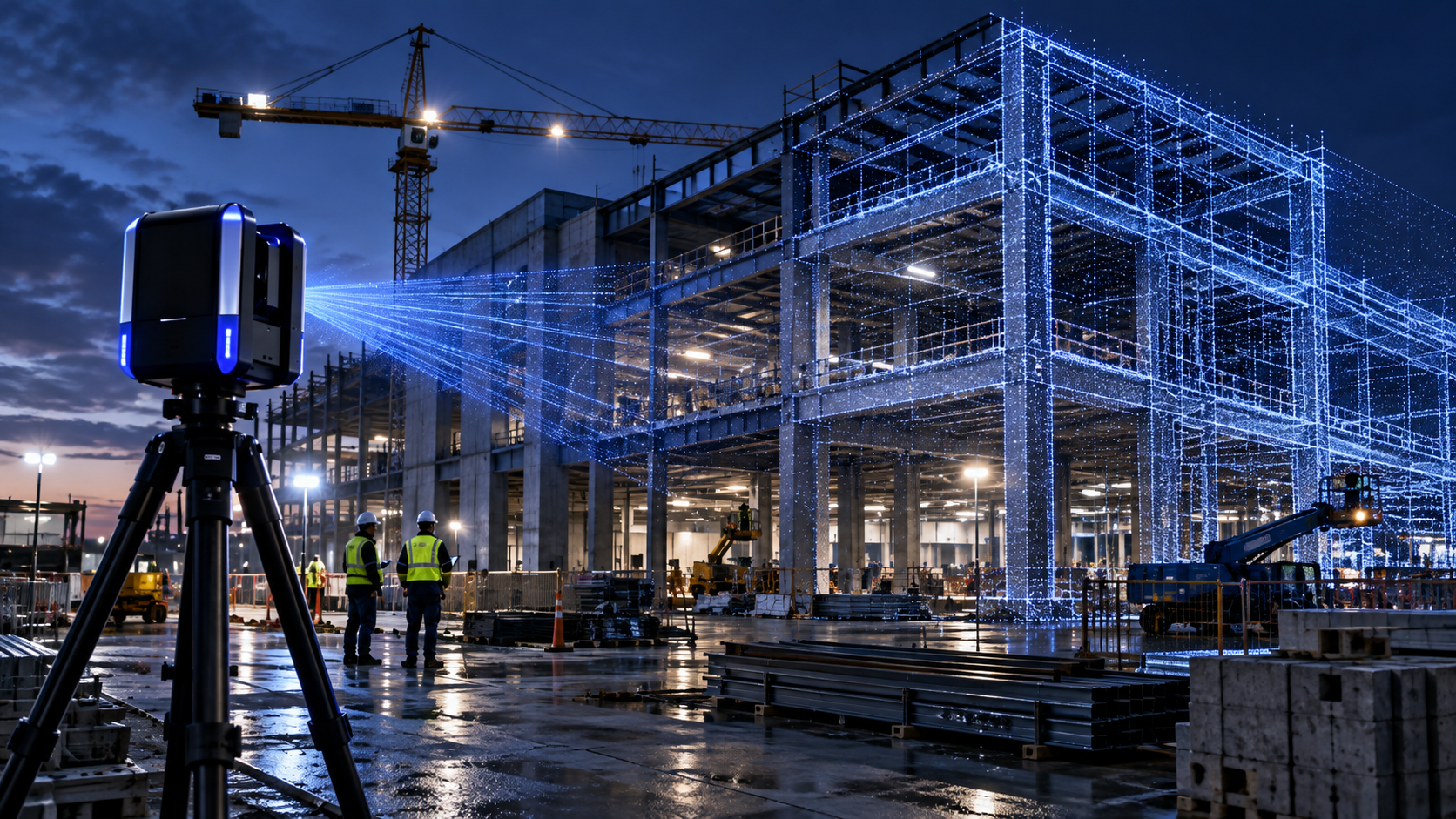
Laser scanner documenting a commercial construction site

Construction & Industrial Sites

Record equipment positions, structural conditions, site geometry and post-incident environments.

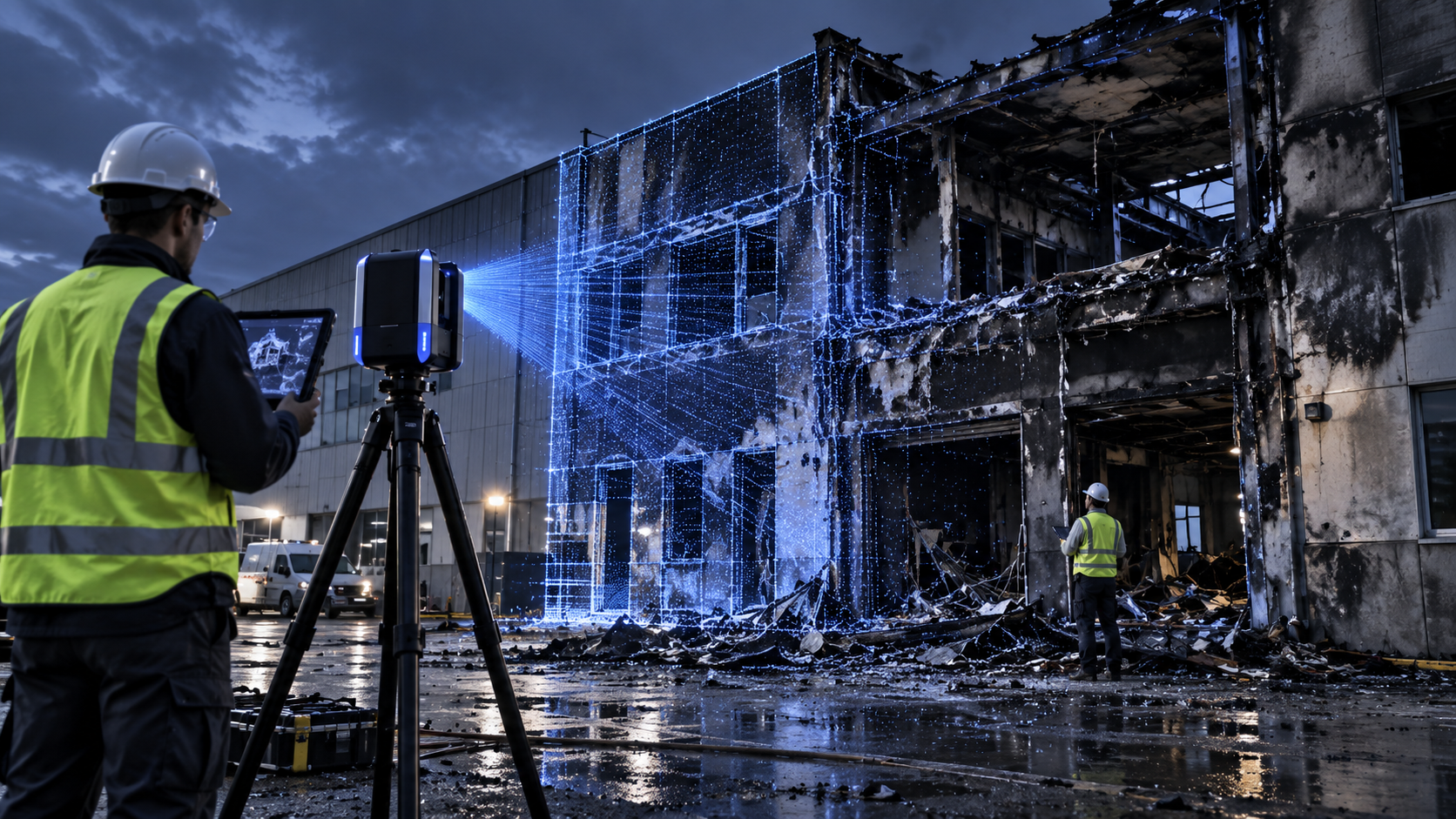
Technicians scanning a fire-damaged commercial building

Fire & Property Damage

Preserve building geometry and damaged areas before cleanup, demolition or reconstruction changes the site.

Investigators scanning a vehicle collision scene at an intersection

ACCIDENT RECONSTRUCTION STARTS WITH THE SCENE

A damaged vehicle tells part of the story.

The roadway matters too.

A reconstruction team may need lane geometry, vehicle resting positions, barriers, impact areas, roadway features, visibility and surrounding structures.

3D laser scanning preserves those conditions in a measurable digital form.

Qualified reconstruction professionals can work from that data alongside photographs, vehicle information, witness accounts and other evidence.

  • Vehicle-to-Vehicle Collisions
  • Commercial Vehicle Crashes
  • Motorcycle Collisions
  • Pedestrian Incidents
  • Intersection Crashes
  • Property Impacts
  • Multi-Vehicle Scenes
  • Line-of-Sight Review

WHEN A BASIC TECHNICAL ANIMATION IS NOT ENOUGH

Detailed 3D visualization for complex litigation and technical presentation.

Many cases can be explained with diagrams, standard reconstruction software or a basic technical animation.

Some matters need more detail.

GO3D can combine measured geometry, technical models and documentary-style CGI to create visual material that helps people understand a complex event.

The work starts with the available data.

That may include scan data, engineering files, photographs, expert analysis, measurements and other records supplied by the case team.

The goal is not to add drama.

The goal is to show technical information clearly.

Detailed 3D visualization can help a legal or technical team compare competing interpretations, study geometry and explain an expert's analysis to people who were not present at the scene.

The same modeling skills also apply outside litigation.

Engineering, manufacturing, training and design teams often need the same type of clear technical visualization.

Litigation team reviewing a 3D collision visualization

Documentary-Style CGI

Present complex events in a polished visual format while keeping the technical context visible.

Data-Based Modeling

Build visual assets from scan data, measurements, CAD files and information supplied by the technical team.

Multi-Industry Visualization

Apply the same modeling process to legal, engineering, manufacturing and technical projects.

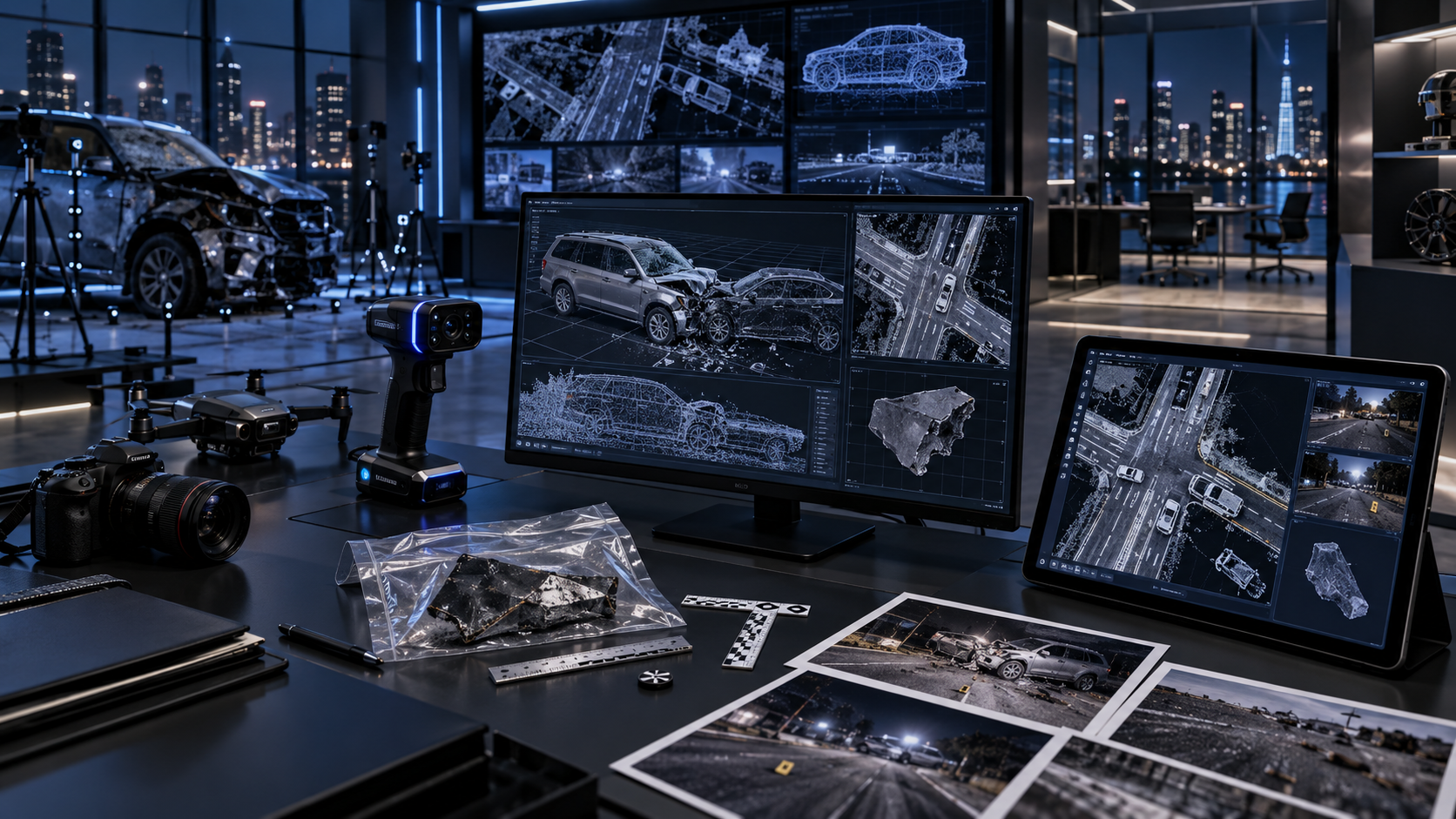
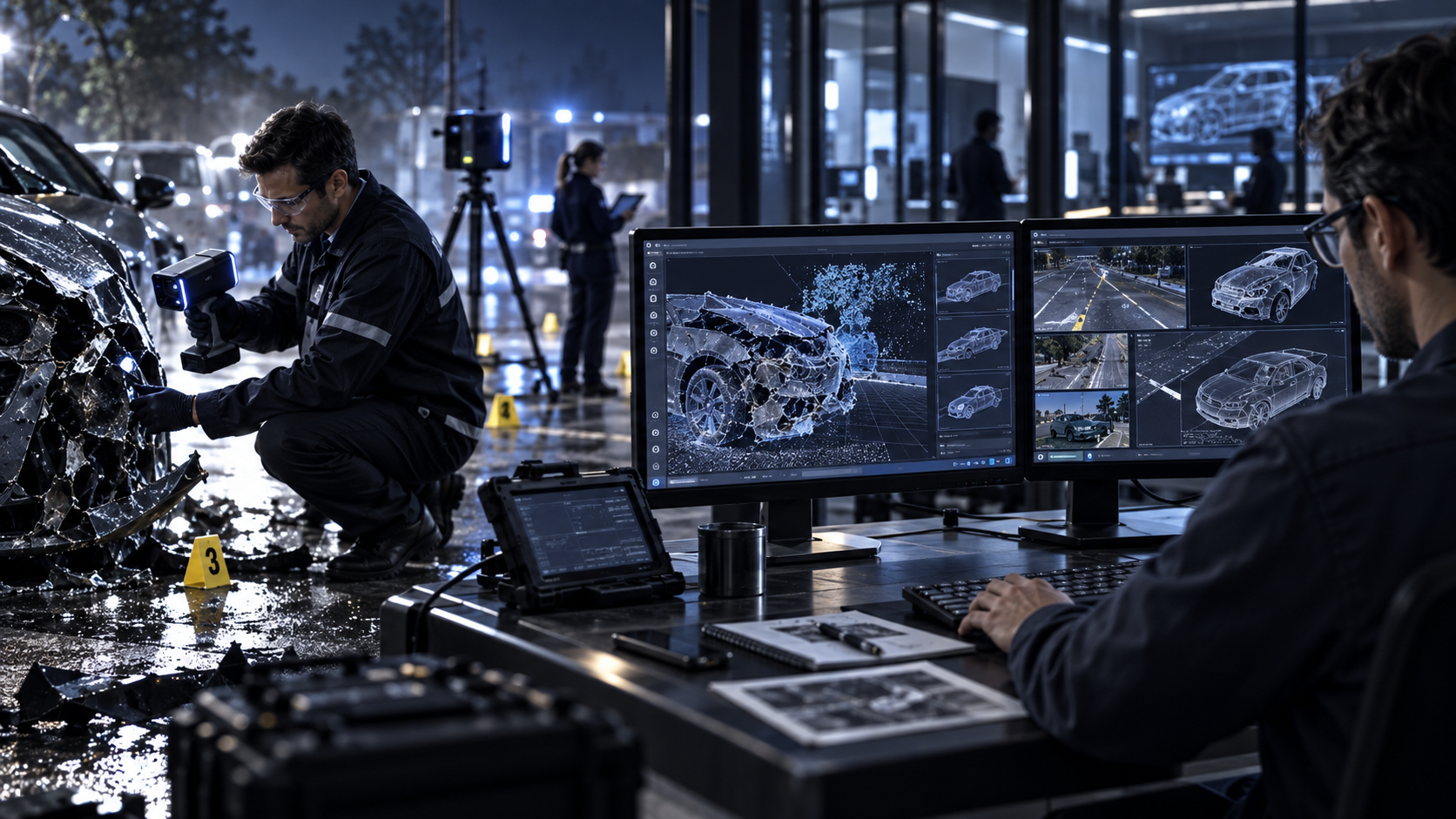
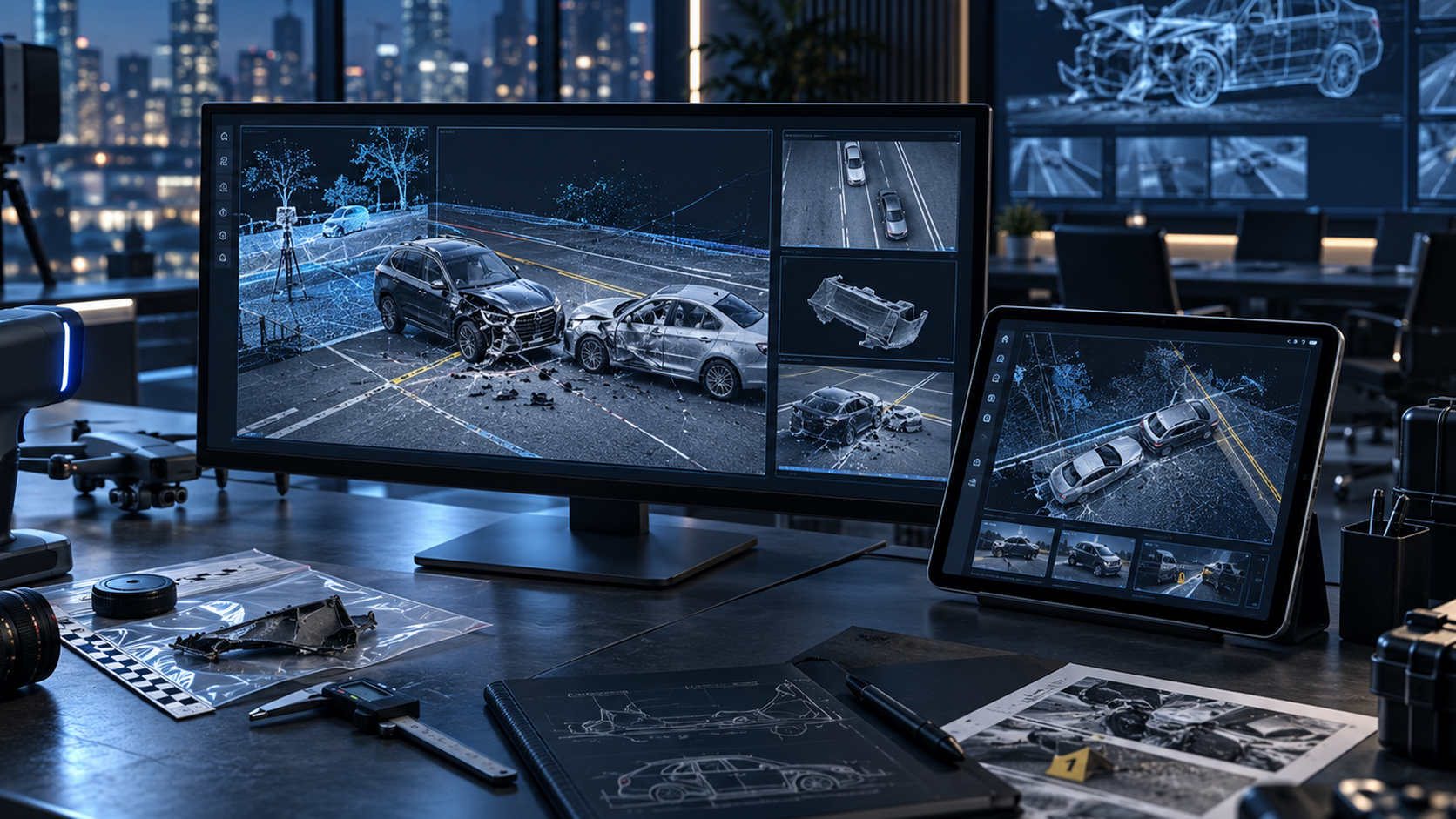
Forensic workstation with scan data, physical evidence and scene photographs

TURN PHYSICAL EVIDENCE INTO MEASURABLE DIGITAL GEOMETRY

Some investigations move from the full scene to one damaged object.

A vehicle part, mechanical component, tool, structure or assembly can be scanned at close range and converted into a digital model.

That model gives the technical team another way to measure, compare and document the item without repeated handling of the original evidence.

  • Damaged Automotive Components
  • Fractured Mechanical Parts
  • Product Failure Evidence
  • Deformation Documentation
  • Dimensionally Accurate Reference Models
  • CAD Comparison
  • Engineering Review
  • Demonstrative Exhibits

FROM SCENE TO DIGITAL EVIDENCE

  • Capture
  • Process
  • Analyze
  • Visualize
  • Present
Technicians capturing vehicle damage and preparing digital scene models

Capture

Document the physical scene with the appropriate scanning and imaging system.

Process

Register, clean and organize scan data, photographs and supporting information.

Analyze

Prepare measurable models and visualization assets for the technical team.

Visualize

Turn complex geometry into diagrams, models, still images or animation assets.

Present

Prepare clear visual material for technical review, mediation, litigation, training or presentation.

THE DELIVERABLE DEPENDS ON THE PROJECT

A traffic collision does not need the same output as a damaged mechanical component.

GO3D prepares the captured data around the needs of the investigation and the technical team.

Technical workstation displaying 3D models and scene documentation
Registered Point CloudsMeasurable 3D Scene ModelsScene Documentation ImagesCAD Reference Geometry2D DiagramsDerived Measurements3D Visualization AssetsReconstruction Support AssetsLitigation GraphicsCGI AssetsVirtual Scene EnvironmentsPresentation StillsTechnical Data Packages

COMMON QUESTIONS ABOUT FORENSIC 3D SCANNING

What is forensic 3D laser scanning?

It records the shape and position of physical surfaces and converts that information into a measurable digital point cloud or 3D model.

How is scanning different from scene photography?

Photography records selected viewpoints. A scan preserves spatial geometry across the captured area. Teams can measure and review that geometry after the physical scene changes.

How can scanning support a lawsuit?

Scan data can give attorneys and retained experts a common spatial reference for reviewing distances, object positions, damaged areas, structures and other physical conditions.

Can an accident reconstruction expert work with scan data?

Yes. Qualified reconstruction professionals can incorporate appropriate scan data into their analysis along with the other records and evidence available in the case.

Can GO3D scan damaged parts?

Yes. Individual components can be digitized for measurement, modeling, engineering review and visual presentation.

Does GO3D determine who is at fault?

GO3D provides scanning, modeling and visualization support. Investigators, engineers, retained experts, attorneys and agencies make the appropriate investigative or expert conclusions.

START WITH THE SCENE

DISCUSS YOUR FORENSIC PROJECT

Give us the basic details. Eddie can follow up to discuss the scene, location, timeline and technical requirements.